Schools, civil servants and the cost of living: France's social crisis explained
Contents
This was France's dominant story of the week. A protest movement that began in high schools in early October, and grew on the back of rising prices, entered a new phase between November 9 and 15. School blockades are losing steam, the fight is now about public-sector pay, and Prime Minister Sébastien Lecornu is mixing a hard line with an offer to negotiate.
How did this start?
There are two roots. The first is in schools: in early October, high school students blockaded their buildings over underfunding and teacher shortages. At the peak, in early October, the Education Ministry counted up to 800 high schools as "disrupted".
The second is the cost of living. Since October 17, the yellow vest coordination and youth organisations have called marches "against the high cost of living" every Saturday. The October 17 protests turned destructive: the chairman of insurer Covéa puts the damage at 400 to 500 million euros, while the French chambers of commerce estimate 1.2 billion.
The economy explains part of the anger. According to national statistics office Insee, in figures published on November 13, inflation reached 3.4% year on year in October, the highest since January 2024, driven by energy prices (up 24.1%) since the war in the Middle East broke out. For comparison with the US and the euro area, see our piece on inflation and interest rates.
What happened this week?
- Thursday, November 12: the government says offences committed near or inside high schools, or online, will be systematically referred to prosecutors. It says classes have resumed in 98% of schools.
- Thursday, November 12: Lecornu says at least 40 education staff members may have been complicit in the violence and wants them prosecuted. Teachers' unions call the remarks provocative.
- Friday, November 13: Lecornu meets civil service unions and opens a month of talks on five topics. The CFDT, until then the only union not backing the November 17 strike, joins the call.
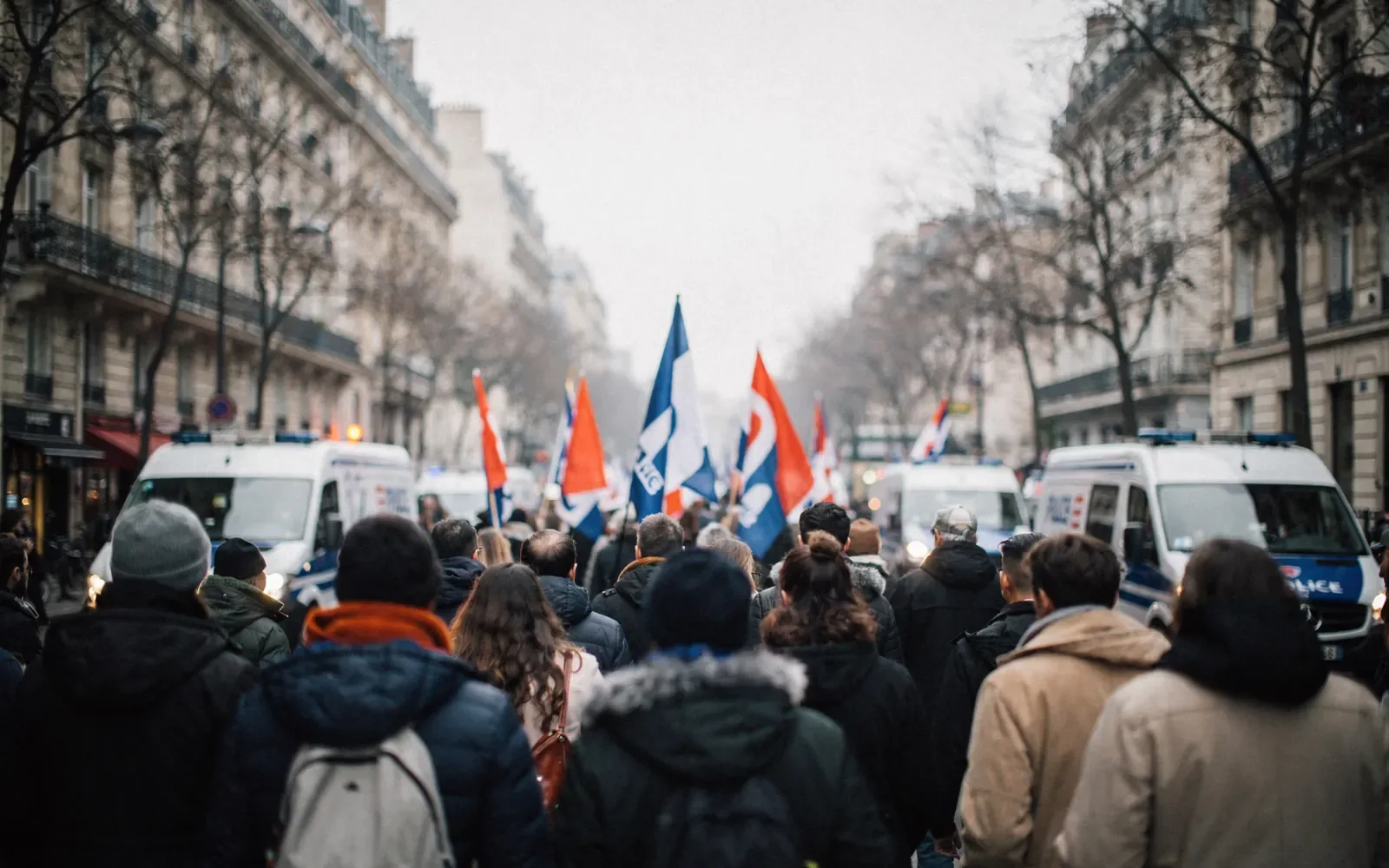
- Saturday, November 14: the fifth Saturday of cost-of-living marches, with 106,000 people nationwide according to the Interior Ministry, and 200,000 according to the youth union coalition.
How many schools are still blockaded?
It depends who is counting. On the morning of Friday, November 13, the ministry reported about ten blockaded high schools out of roughly 3,700 (0.3%), down from 24 the day before and a peak of 81 on the national protest day of November 5. The main head teachers' union, SNPDEN-Unsa, says "no fewer than 1,000" schools were directly affected, and that 150 to 200 have not returned to normal since the autumn break.
De toute évidence, le ministère a fait le choix de ne compter que les établissements complètement bloqués. (Clearly, the ministry chose to count only schools that were completely blockaded.)
— Bruno Bobkiewicz, general secretary of SNPDEN-Unsa, to franceinfo, November 13, 2026
What is the government offering civil servants?
Lecornu set out five topics to be negotiated by mid-December. He is due to meet the unions again on December 11, after the civil service's workplace elections.
| Topic | What was announced |
|---|---|
| Pay | Emergency raises for the lowest salaries and a structural overhaul of pay scales |
| Equality | Equal pay for women and men |
| Commuting | Covering "some transport costs" |
| Protection | Better protection for staff who are injured or threatened |
| Neutrality | Protecting civil servants' neutrality and independence |
Unions say this falls short. CGT leader Sophie Binet called it a "meeting for nothing" and criticised the refusal to unfreeze the point d'indice, the base value used to calculate public salaries. The CFDT points out that hundreds of thousands of public employees are still paid below the minimum wage.
Is the movement running out of steam?
On the streets, turnout is falling: 106,000 marchers on November 14 by the Interior Ministry's count, including 24,000 in Paris, against 146,000 the previous Saturday. By 6 pm the ministry had recorded 219 arrests and ten police officers lightly injured, out of 70,000 police and gendarmes deployed. There were clashes in Lyon, where a BFMTV crew was attacked.
But the conflict is shifting rather than ending, and it comes on top of a budget deadlock: on November 4, the National Assembly rejected the 2027 budget bill, and analysts quoted by CNBC expect the government to force it through again with Article 49.3. Spain lived through a similar wave this week, with a general strike over housing, covered in our Spain explainer.
Frequently asked questions
Why are French civil servants striking on November 17?
To win pay rises in the face of inflation. Their key demand is unfreezing the point d'indice, which the government has so far refused.
Are French high schools open again?
The government says classes have resumed in 98% of schools. The head teachers' union SNPDEN-Unsa says 150 to 200 are still not running normally.
Who organises the Saturday marches?
The yellow vest coordination and youth organisations, since October 17. The main union confederations are focusing on November 17 instead.
When will the government decide?
It is aiming for concrete steps by mid-December, after a new meeting with unions on December 11.
For the rest of the week's news, read the week in 10 points.
Sources
- franceinfo – Lecornu opens a month of talks with civil service unions (November 13, 2026)
- franceinfo – What to expect on Saturday, November 14 (November 13, 2026)
- ICI – November 14 protest figures (November 14, 2026)
- franceinfo – Head teachers dispute blockade figures (November 13, 2026)
- franceinfo – Lecornu accuses some education staff (November 13, 2026)
- franceinfo – Government orders systematic referral to prosecutors (November 12, 2026)
- franceinfo – Inflation at 3.4% in October (Insee) (November 13, 2026)
- franceinfo – Insurers' estimate of October 17 damage (November 14, 2026)
- CNBC – France dealt a fresh blow as budget rejected (November 5, 2026)